The 22nd Annual CamTESOL Conference opened in Phnom Penh on February 6, 2026 and was presided over by H.E. Dr. Oung Borat, Secretary of State of the Ministry of Education, Youth and Sport, H.E. Derek YIP, Australian Ambassador to Cambodia, H.E. Dominic Williams, British Ambassador to Cambodia, Ms. Bridgette L. WALKER, Chargé d' Affaires, The United States Embassy Phnom Penh and Mr. MAO Sreng, Country Director and CamTESOL Convenor, IDP Education and the Australian Centre for Education (ACE). Over the past 22 years, the CamTESOL Conference has hosted over 29,000 delegates, representing more than 80 nationalities, from 6 continents, ranging from edtech and publishing to curriculum development and Quality Assurance. CamTESOL continues to provide a dynamic platform that fosters advancing professional development, capacity-building, and upskilling in English Language Teaching (ELT).
This year, CamTESOL welcomed over 1,400 delegates from more than 40 countries, who delivered and participated in over 500 plenary, featured and main conference sessions, panel discussions, and talks, maximizing the sharing and exchange of best practices across 21 streams, under the conference theme of ‘The Future of English Language Teaching in the Digital Era: Empowering Teaching and Transforming Learners’.
CamTESOL is supported by the Ministry of Education, Youth and Sport, the US, Australian and British Embassies, and a broad range of education institutions and individuals involved in ELT in Cambodia, Southeast Asia, and internationally. CamTESOL is acknowledged for its role and contribution to the growth and popularity as well as the improving standard of English language teaching and learning.
H.E. Dr. Oung Borat, Secretary of State of the Ministry of Education, Youth and Sport, inaugurated the conference, highlighting CamTESOL as “a key platform for professional dialogue, networking, and regional collaboration.” He emphasized that Cambodia’s education reforms, alongside ICT integration, are redefining teaching and learning, with AI increasingly influencing professional development at all levels.
H.E. Derek Yip, Australian Ambassador to Cambodia, reflected on Australia’s long-term support for Cambodia, noting that since the establishment of ACE in 1992, over one million students have gained English-language skills, strengthening national development, fostering international collaboration, and expanding economic participation.
“English opens doors to global knowledge, culture, and opportunity,” said H.E. Dominic Williams, emphasizing the evolving adaptability of the language in a digital world. Ms. Bridgette Walker added, “Proficiency in English empowers Cambodian learners to engage on a global stage, driving innovation and sustainable growth.”
“Even in an era of AI and digital tools, teachers remain central to learning, and supporting them is key to preparing learners for a rapidly evolving world.”, stated Mr. Mao Sreng, CamTESOL Convenor and Country Director of IDP Education and the Australian Centre for Education (ACE).
The full details of plenary speakers at the 22nd Annual CamTESOL includes:
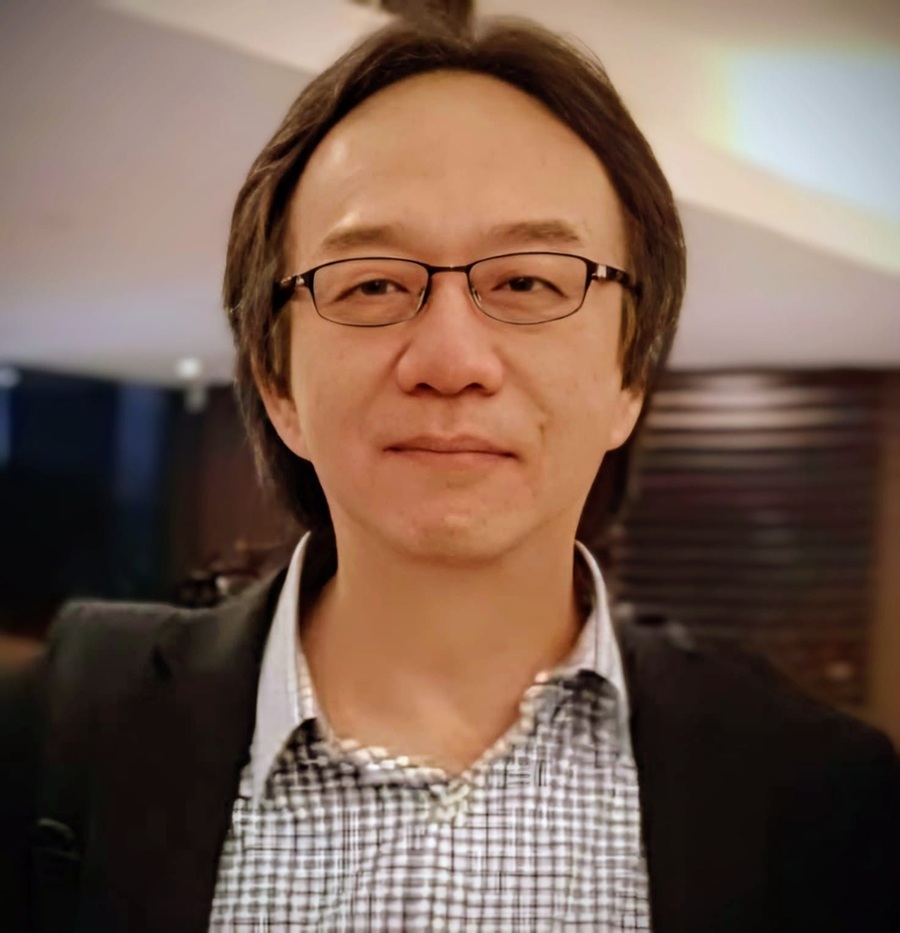
Dr. Willy A. Renandya
Language Teacher Educator
NIE-NTU, SUSS and RELC
Singapore
“Are your students truly engaged?”
One of the buzz words in language education today is engagement. Research shows that students learn more, both quantitatively and qualitatively, when teachers use learning materials and teaching methods that engage their minds, emotions, actions and social interactions. On the flip side, when teachers employ pedagogical practices that fail to engage students, only superficial learning can be expected. The aim of this presentation is to explore the notion of engagement from a second language acquisition perspective, present some of the key elements that are normally associated with it (e.g., curiosity, choice, challenge and creativity) and offer practical suggestions of how language teachers could use pedagogical approaches that fully engage L2 learners in and out of the classroom.
Biography:
Dr. Willy A. Renandya is a language teacher educator with extensive teaching experience in Asia. He currently teaches language education courses in Singapore, including at NIE-NTU, SUSS and RELC. He is also a visiting professor at Chulalongkorn University and Wuhan University. He has given numerous keynote presentations at international ELT conferences, including AsiaTEFL, CamTESOL, IATEFL, KOTESOL, SEAMEO RELC and ThaiTESOL. He has published extensively in the area of second language education and second language acquisition. His publications include Language Teaching Methodology: An anthology of current practice (2002, Cambridge University Press) and Student-centred cooperative learning (2019, Springer International). He maintains a large teacher professional development forum called Teacher Voices:
https://www.facebook.com/groups/teachervoices/
Website: Willy’s ELT Corner: https://www.willyrenandya.com
Google Scholar: https://scholar.google.com.sg/citations?user=gHW1fVIAAAAJ

Pro Wayne E. Wright
Associate Dean for Research, Graduate Programs, and Faculty Development
College of Education, Purdue University
USA
“Viewing and Teaching English Language Learners from a Multilingual Lens”
Traditionally researchers in second language acquisition (SLA) and teachers of English to speakers of other languages (TESOL) have viewed language learners as incomplete monolingual speakers of the target language (e.g., English). In this presentation I will highlight the “multilingual turn” in SLA and TESOL which has been growing in acceptance since the 2010s to challenge these traditional views and their associated practices. This multilingual turn has introduced new concepts such as plurilingualism, dynamic bilingualism, and translanguaging. These concepts help us to better understand students as emerging bilinguals and multilingual learners. These language learners have rich and growing linguistic repertories from which they can draw upon for effective learning and for engaging in meaningful communication in bilingual and multilingual contexts. I will share the findings from my own research in primary schools and higher education institutions in the United States of American and in the Kingdom of Cambodia to highlight the power of teaching language learners from a multilingual lens. The presentation will end with practical suggestions for ways you can integrate translanguaging pedagogy in your own classrooms.
Biography:
Pro Wayne E. Wright is the Associate Dean for Research, Graduate Programs, and Faculty Development and the Barbara I. Cook Chair of Literacy and Language in the College of Education at Purdue University. Dr. Wright completed his BA and MA degrees at California State University Long Beach, and his PhD at Arizona State University. He is a former ESL and bilingual teacher in Long Beach, California, where he helped establish one of the first Cambodian bilingual programs in the country. Dr. Wright has over 25 years of experience as a teacher educator, preparing both pre-service and in-service teachers to work effectively with students classified as English language learners, and other multilingual learners. Dr. Wright has over 100 publications in the areas of language, education, and assessment policy and programs for language minoritized students.
Sponsored by 
Ms. Gae NASTASI
EAL/D Coordinator for Metropolitan Region /
President of QATESOL
Department of Education Queensland
“Developing a Critical Lens: Building Metacognitive Awareness in Language Learners for an AI-Driven World”
As artificial intelligence becomes increasingly embedded in education, Englishlanguage teachers face a critical challenge: how do we help learners engage with AIto enhance their language learning while cultivating a critical awareness of thecontent and feedback AI provides? This plenary considers essential strategies fordeveloping learners’ critical and metacognitive awareness so that so that AIserves as a support — not a shortcut — for the deeper thinking and meaning-makingthat real learning requires.
AI can enhance learning by modelling vocabulary, providing feedback, andgenerating examples of written or spoken language. Yet these outputs are oftencontext-blind, lacking the subtle connotations, cultural perspectives, and pragmaticintent that shape real communication. Teachers therefore need to embedmetacognitive and critical literacy strategies that enable students to question,interpret, and evaluate AI-generated text —what is produced, how meaning isconstructed and the contextual appropriateness of AI-generated language.Drawing on EAL/D and TESOL contexts, this session explores classroomapproaches for building AI literacy, encouraging reflection, and cultivating a criticallens in learners. It is essential that language education in an AI-driven world mustcontinue to privilege human judgment, intercultural understanding, and the capacityto engage thoughtfully with language. AI can support and enrich the process, but itcannot replace the intellectual and emotional work of learning to communicate withpurpose, empathy, and depth.
Biography:
NASTASI Gae is currently EAL/D Coordinator for Metropolitan Region, Department of Education Queensland and President of QATESOL. Having trained as a French and English language teacher, she has been teaching English as an Additional Language for 40 years, mainly in Brisbane secondary schools, from on-arrival to Senior English. She has also taught English overseas at all levels, from beginners to advanced, and with both adolescents and adults. She is interested in curriculum and pedagogy supporting language learning.
For more information, please stay connected to the CamTESOL website, Facebook page and app.
The CamTESOL Secretariat gratefully acknowledges the support of the following sponsors and exhibitors to the 22nd Annual CamTESOL Conference:
For sponsorship and exhibitor opportunities at the 23rd Annual CamTESOL Conference in 2027, please contact panhchaleak.sokheng@idp.com or visit the 'Partnership Options' section of the CamTESOL website.